

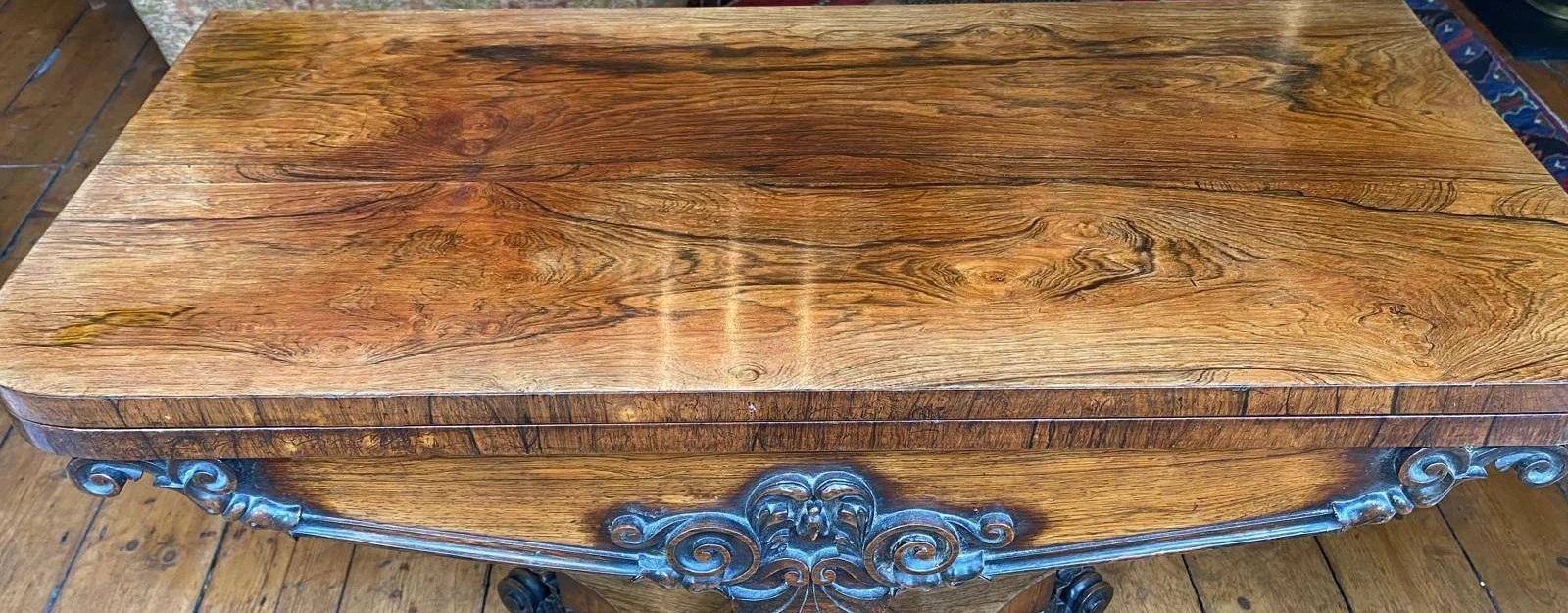
Furniture Restoration
I restore furniture for clients across Yorkshire, including Ilkley, Harrogate, Wetherby, Leeds, Bradford and Yorkshire. Specialising in sympathetic furniture and historic joinery restoration with a conservation‑led approach that preserves original craftsmanship, materials, and patina. My work focuses on stabilising, repairing, and enhancing furniture and joinery while retaining its authentic character. Below is how I approach this and the typical problems I solve.
What Is Sympathetic Furniture Restoration?
For me, sympathetic restoration is like preserving a good history book: you keep the original words intact, so the narrative isn’t lost. In the same way, I aim to retain the authentic story of a piece rather than overwrite it.
My Approach to Sympathetic Restoration
Using traditional materials and gentle techniques, avoiding harsh treatments or chemicals that would erase character.
Respect for original materials
This may mean keeping an aged surface or the wear around a handle. These marks reveal how an object has been used and preserve depth of colour and texture. Over‑restoration removes this history.
Conserving Surface Patina
I carry out only essential repairs to stabilise a structure or surface, keeping my impact light and reversible.
Minimal Intervention
Repairing rather than replacing reduces waste and makes use of existing materials.
Sustainability
Materials and construction often reflect social and colonial histories, and restoration should respect that context.
Cultural and historical sensitivity
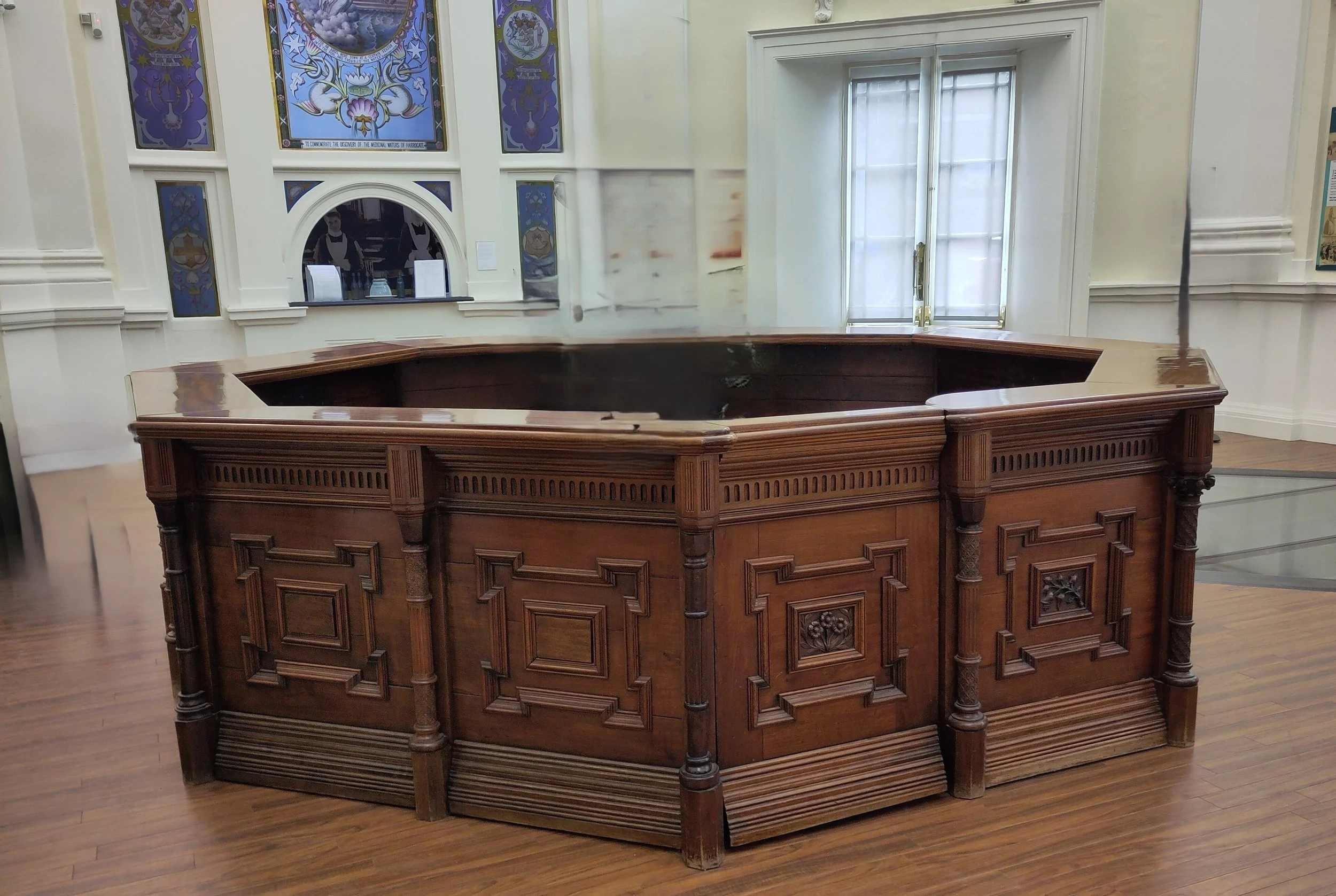
Royal Pump Rooms, Harrogate - spa water bar
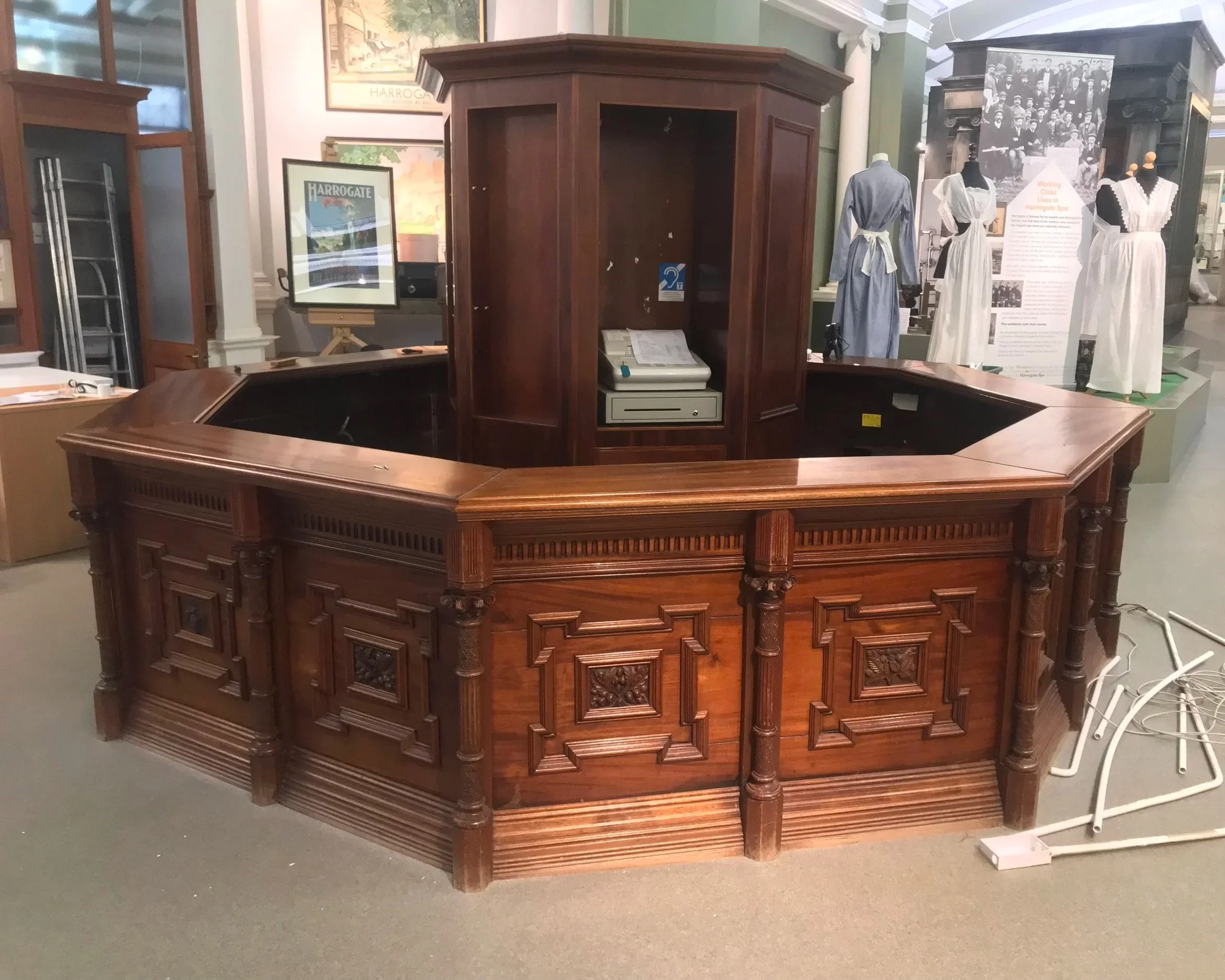
Before treatment
After treatment
Typical Furniture Problems I Repair
I restore poorly functioning or tired‑looking furniture by respecting its history and craftsmanship.
My sympathetic restoration approach includes the following key principles:
Joints loosen through wear, glue failure, or shrinkage. I clean out old glue, use sustainable reversible adhesives, and reinforce joints with matching wood or discreet metal dowels before carefully clamping.
How I Restore Loose Joints
Peeling or missing veneers are replaced with period veneers matched for species, grain, and colour. I use reversible adhesives and finish with traditional materials such as water stains, shellac, and natural pigments.
Veneer Repairs and Conservation
Cracks, splits, warping, and weakened frames are stabilised using compatible wood inserts or eco‑friendly fillers. Warped components are realigned with controlled moisture or corrective joinery, preserving as much original material as possible
Typical structural Issues with furniture
Scratches and worn finishes are cleaned gently, lifted with steam, or filled with colour‑matched waxes. I refinish using sustainable oils, waxes, or shellac.
Surface Finishing and Patina Conservation
Furniture hardware Problems from metalwork to mother of pearl
Missing or poor replacements are corrected by salvaging original locks ormolu, and inlay/veneer non-wood materials or sourcing period‑appropriate pieces.
In summary, my restoration work focuses on preserving original surfaces, stabilising structures, and respecting the cultural and historical context of each piece. My goal is always to repair without erasing the story. If you have a piece that needs careful, sympathetic restoration, you’re welcome to get in touch for advice or an assessment.